CFC Media Lab
From personal photography to an interactive VR documentary selected for Venice Virtual Reality.
- Role
- Co-Writer, Co-Director, Co-Producer, Interaction Designer
- Tenure
- 2018
- Environment
- Festival-circuit immersive storytelling
- Technologies
- DepthKit, volumetric capture, spatial interaction design
Scope: Interactive mixed-media VR documentary
Team: Co-produced with CFC Media Lab
Origin
I spent ten years as a fashion photographer. By 2016 I was feeling stuck; technically proficient, creatively restless, and drawn to something more personal.
Around that time, trans men were becoming more visible publicly, but in daily life they remained largely invisible. Passing was a survival mechanism. Being seen meant risk. I started attending support groups, spending time in people's homes, being invited into the private spaces where they felt most like themselves.
It changed me. The intimacy of those encounters, the specificity of how each person had built their own identity against enormous resistance, felt urgent to share. I wanted to build a bridge. Not explain trans experience to outsiders, but let them feel what I had felt standing in those rooms.
My co-director Elli Raynai was working in VR production at the time. We both understood immediately that VR was the only medium that could approximate the experience of being physically present with someone; the scale of another body, the sense of shared space, the feeling of being trusted with someone's story.
From Prototype to Venice
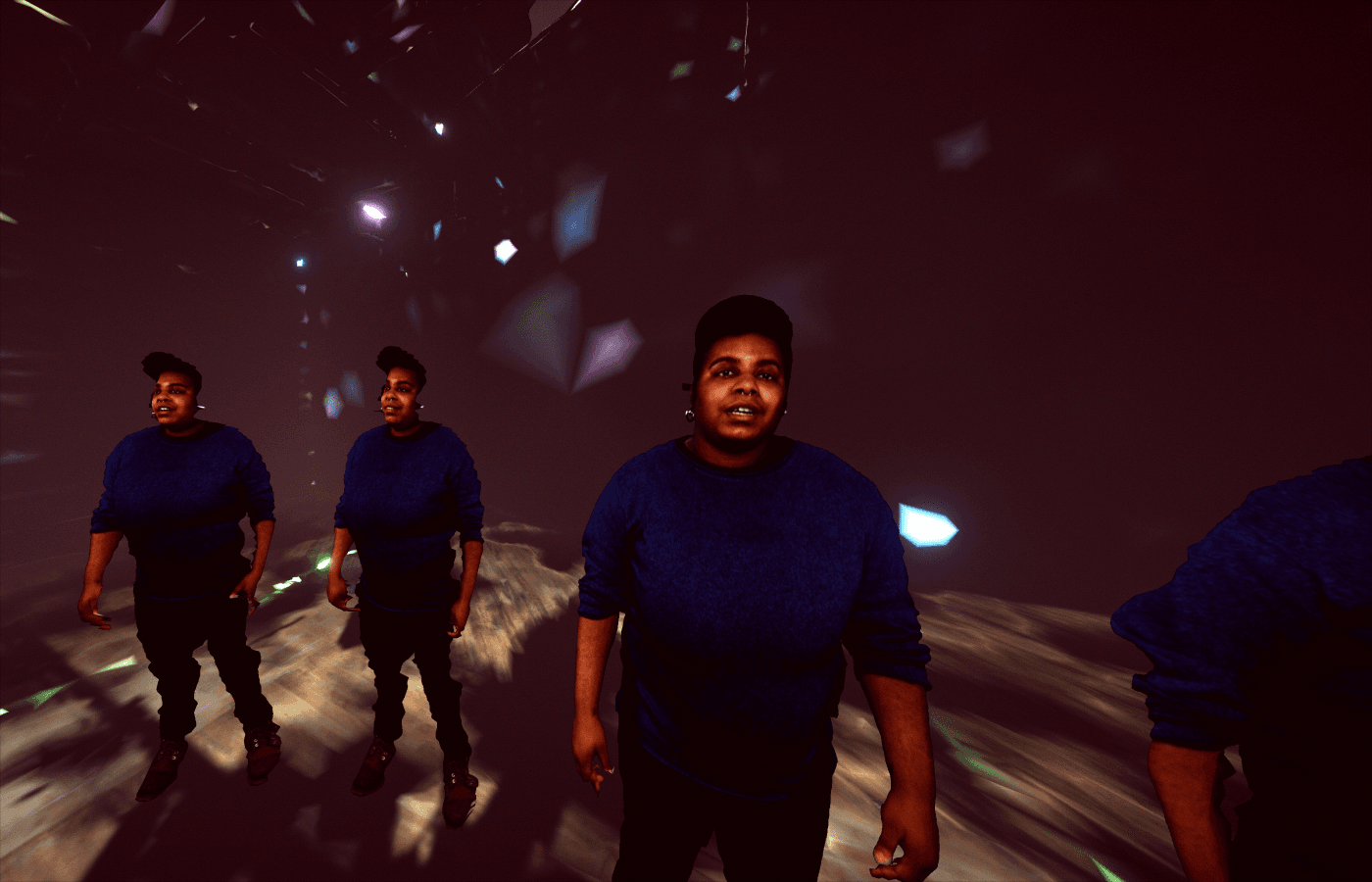
Devyn in "Made This Way: Redefining Masculinity"
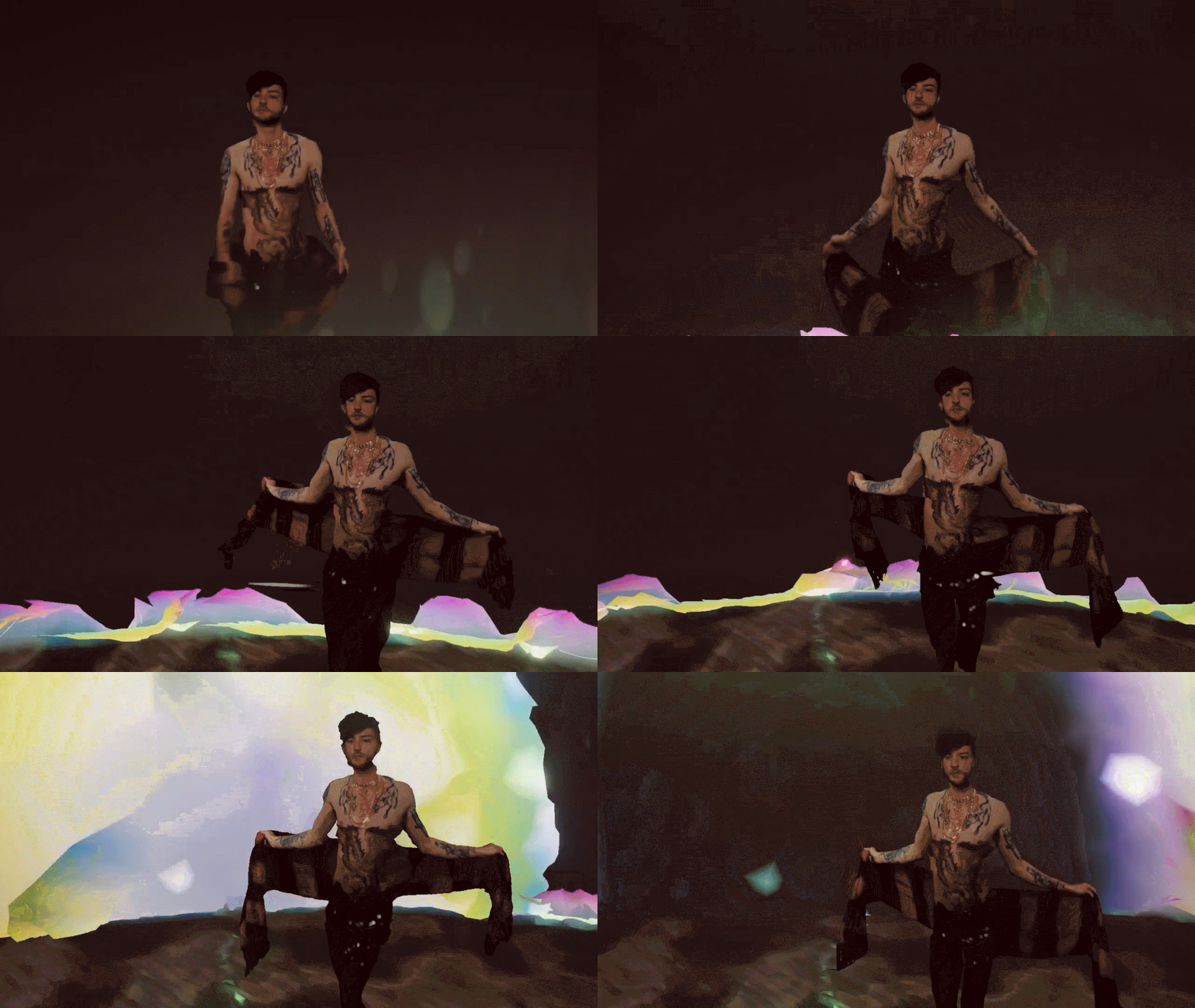
We started with a prototype. Using DepthKit volumetric capture, we developed an early proof of concept that combined my photographic series with spatial VR testimonials; letting viewers move physically around the subjects as they spoke.
We pitched the prototype in Los Angeles, New York, and Toronto. CFC Media Lab came on board as co-producer, marking their first project to compete at Venice Film Festival.
The final experience ran 18 minutes and placed viewers inside the personal spaces of two participants, Devyn Farries and Elijah Miley. The interaction design had to solve a specific problem: how do you let someone move freely through an intimate space without the navigation itself breaking the emotional connection? We designed spatial interaction around presence rather than control; minimal interface, body-scale volumetric captures, the participant's own artwork integrated into the environment around them.
The experience was selected for Venice Virtual Reality at the 75th Venice Film Festival in 2018.
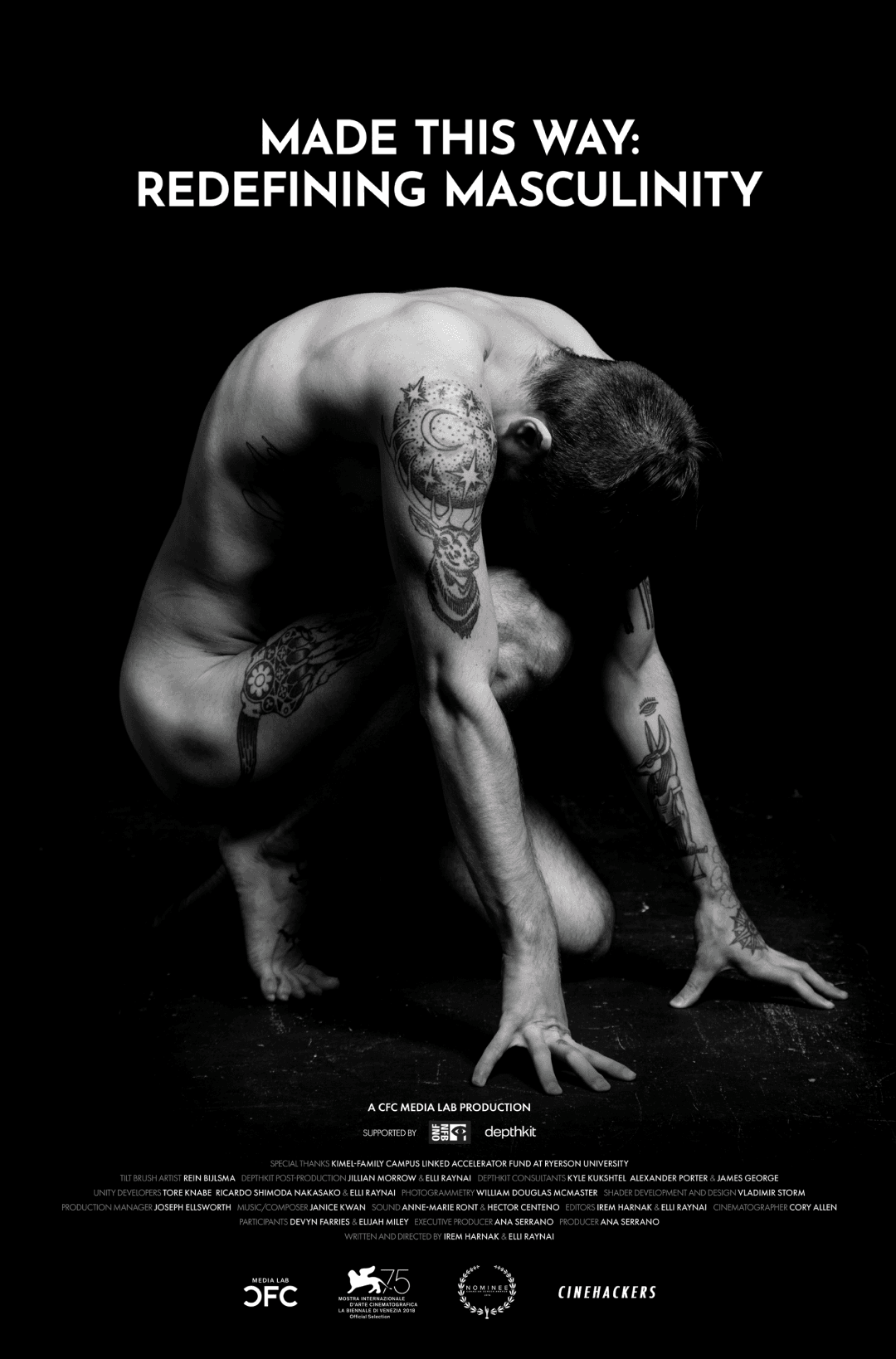
Made This Way poster
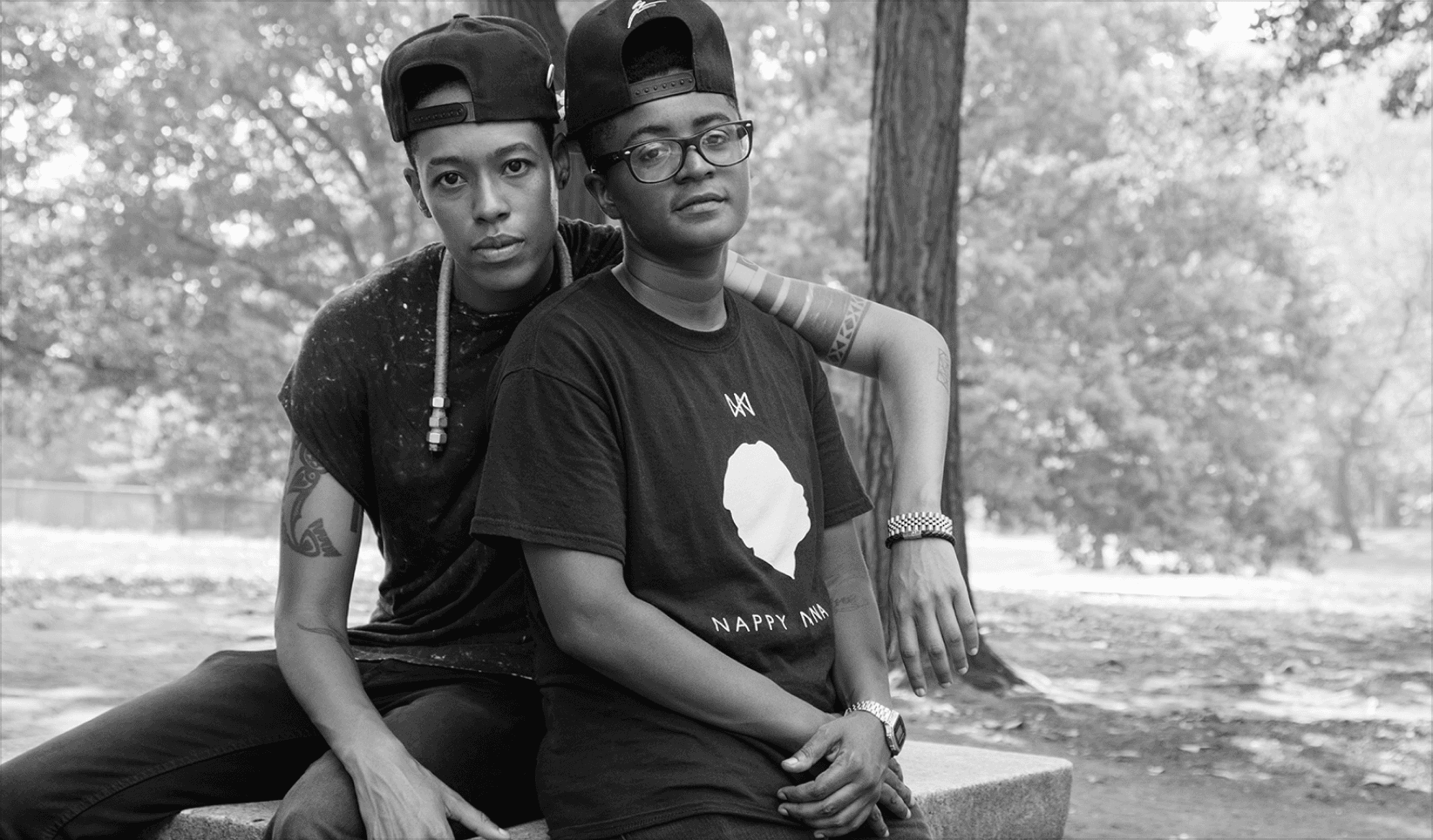
Brooklyn Bois
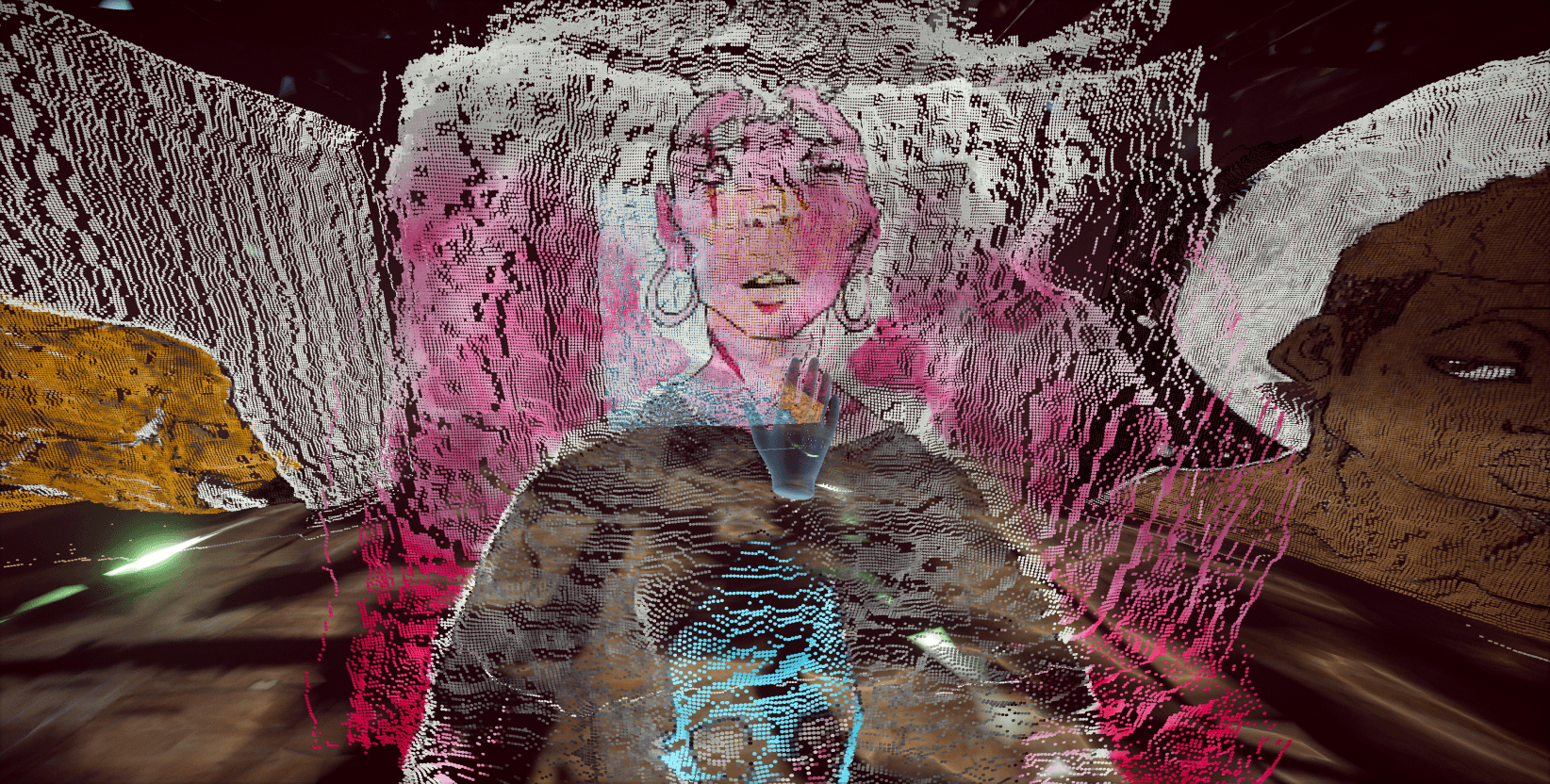
Devyn's Art in VR
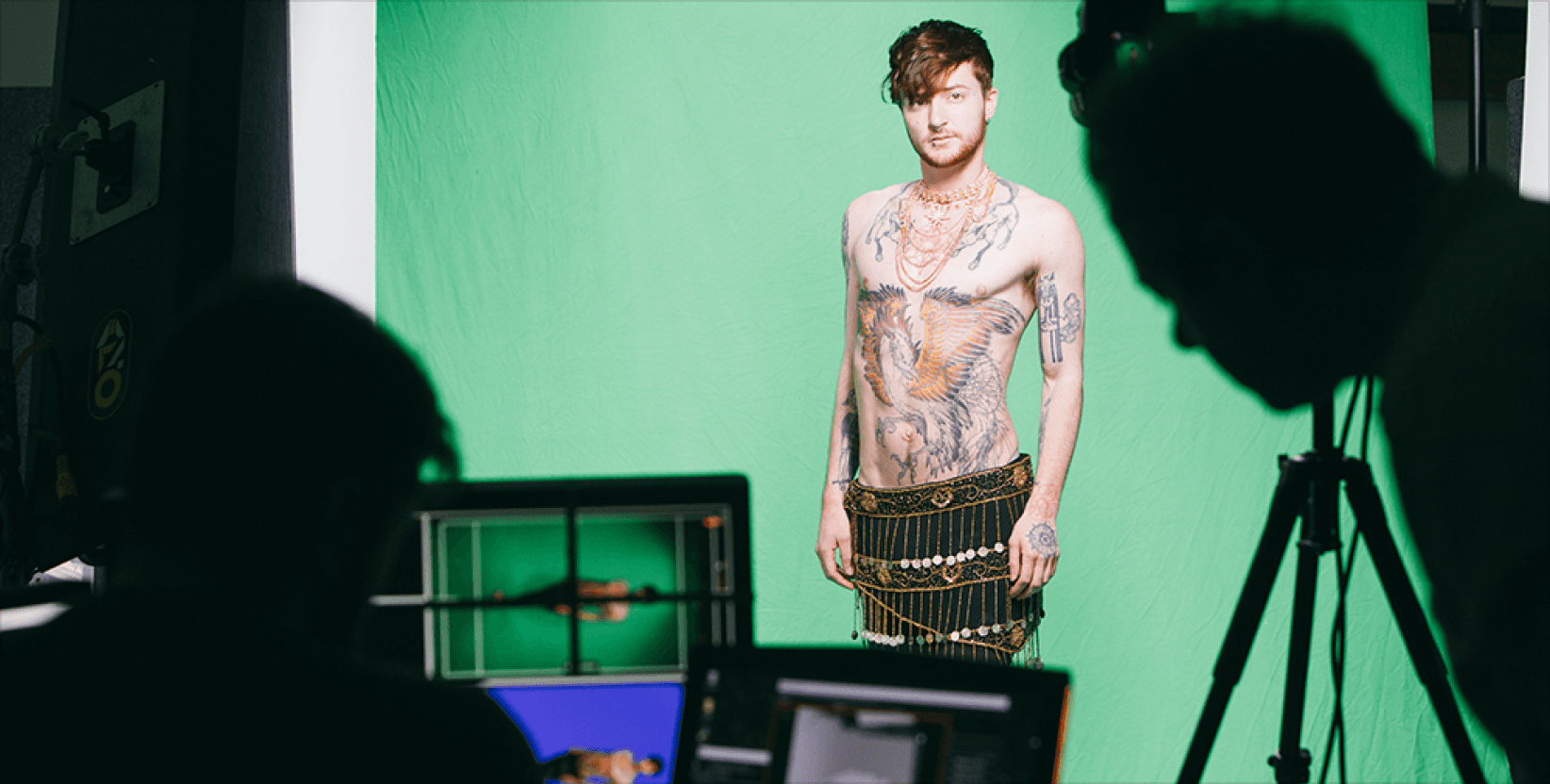
Volumetric capture set
Usability Testing and Iteration
After Venice we ran structured usability testing with four participants. I recruited the participants, designed the testing plan, and facilitated the sessions.
What we found was that the entry sequence and navigation created friction at the wrong moments — points where the emotional immersion was highest but the interaction was least clear. We redesigned the menu structure and refined the navigation flow based on what we observed.
We returned to production, shot additional footage, and submitted the revised experience to the broader festival circuit.
Impact
- Selected for Venice Virtual Reality, 75th Venice Film Festival, 2018
- Canadian Screen Awards nominee, Best Immersive Experience, 2019
- Screened at Festival du Nouveau Cinema, HotDocs, Busan International Film Festival, Regent's Park Open Air Theatre, and Inside Out Toronto
Reflection
This project taught me that the most important design decisions aren't always structural. Sometimes they are about what you leave out; how much interface, how much guidance, how much mediation stands between a viewer and an experience.
Working at the intersection of documentary, photography, and spatial interaction design also clarified something about how I approach all design work: I'm most interested in the moments where technology disappears and something human takes over.